

Bloating Explained: What It Is, Why It Happens, and How to Find Relief
That uncomfortable feeling of tightness in your abdomen — the one that makes your jeans feel snug and leaves you feeling sluggish — is something millions of people experience regularly. You're not imagining it. Bloating is real, measurable, and affects how you feel throughout your day. But here's what most people don't understand: bloating isn't always what it appears to be on the surface. The science behind it is more nuanced than a simple "you ate too much."
In this article, we'll walk through what bloating actually is from a physiological perspective, explore the root causes that trigger it, and then move into the practical solutions that research supports. By the end, you'll have a framework for understanding your own bloating and knowing which strategies are worth trying.
Understanding Bloating: Definition and What's Actually Happening
Bloating is the sensation of abdominal fullness, tightness, or distension. But here's the key distinction: the sensation you feel doesn't always match what's actually happening in your gut.
Think of your digestive system like a balloon. When you blow air into a balloon, it expands and becomes tight — that's one form of bloating (called distension, where gas accumulates and literally stretches your abdominal wall). But you can also feel bloated even when your stomach isn't significantly distended. This is called bloatedness — a perception of fullness without necessarily more food or gas present.
The difference matters because it tells us something important: bloating is partly physical (gas, food volume, water retention) and partly neurological (how your gut perceives sensations and communicates them to your brain). Understanding which type you're experiencing changes how you address it.
The Root Causes: What Really Triggers Bloating
Bloating doesn't happen randomly. It's the body's response to specific triggers. Here are the most common ones:
Swallowed Air (Aerophagia)
Every time you eat, drink, chew gum, or talk while eating, you're swallowing small amounts of air. Under normal conditions, this air passes through your system without issue. But if you're eating too quickly, not chewing thoroughly, or drinking carbonated beverages, the amount of swallowed air can exceed what your digestive system comfortably handles.
Fermentation of Undigested Carbohydrates
This is where what causes bloating gets more complex. When carbohydrates — especially certain types like fiber, sugar alcohols, and starches — reach your colon without being fully broken down in the small intestine, your gut bacteria ferment them. This fermentation produces gas: hydrogen, methane, and carbon dioxide. For people with gut bloating or sensitive digestive systems, even normal fermentation can cause noticeable symptoms.
Common culprits include:
- High-fiber foods (beans, cruciferous vegetables like broccoli and cabbage)
- Sugar alcohols (sorbitol, xylitol, maltitol found in sugar-free products)
- Wheat and certain grains (in people with gluten sensitivity)
- Lactose (in those with lactose intolerance)
- High fructose foods (apples, pears, honey)
The reason these foods cause problems isn't because they're unhealthy — it's because your digestive system may lack the enzymes or bacterial balance to process them efficiently.
Impaired Gastric Emptying
Your stomach's job is to churn food into a liquid paste (called chyme) and gradually release it into your small intestine. When this process slows down — a condition called gastric stasis — food sits in your stomach longer than it should, creating a sensation of heaviness and fullness even though you haven't overeaten.
Stress, certain medications, low stomach acid, and lack of physical activity can all slow gastric emptying. This is why you might feel bloated stomach after an otherwise normal meal during a stressful day.
Dysbiosis and Altered Gut Bacteria
Your gut contains trillions of bacteria. When the balance shifts — fewer beneficial bacteria and more gas-producing species — bloating becomes more frequent. This imbalance (dysbiosis) can result from antibiotics, poor diet, chronic stress, or insufficient sleep. The resulting overgrowth of fermenting bacteria means more gas production and greater sensitivity to that gas.

Intestinal Permeability and Inflammation
When the intestinal lining becomes compromised (sometimes called "leaky gut"), the barrier function weakens. This can trigger immune responses that cause inflammation, water retention in the abdominal cavity, and increased visceral sensitivity — meaning your gut becomes more aware of normal amounts of gas, amplifying the sensation of bloating.
Hormonal Fluctuations
For menstruating individuals, bloating often peaks in the luteal phase of the menstrual cycle, when progesterone levels rise. Progesterone slows gut motility (the wave-like contractions that move food through your digestive tract), leading to gas accumulation and water retention. This is why bloatedness often resolves naturally once your cycle shifts.
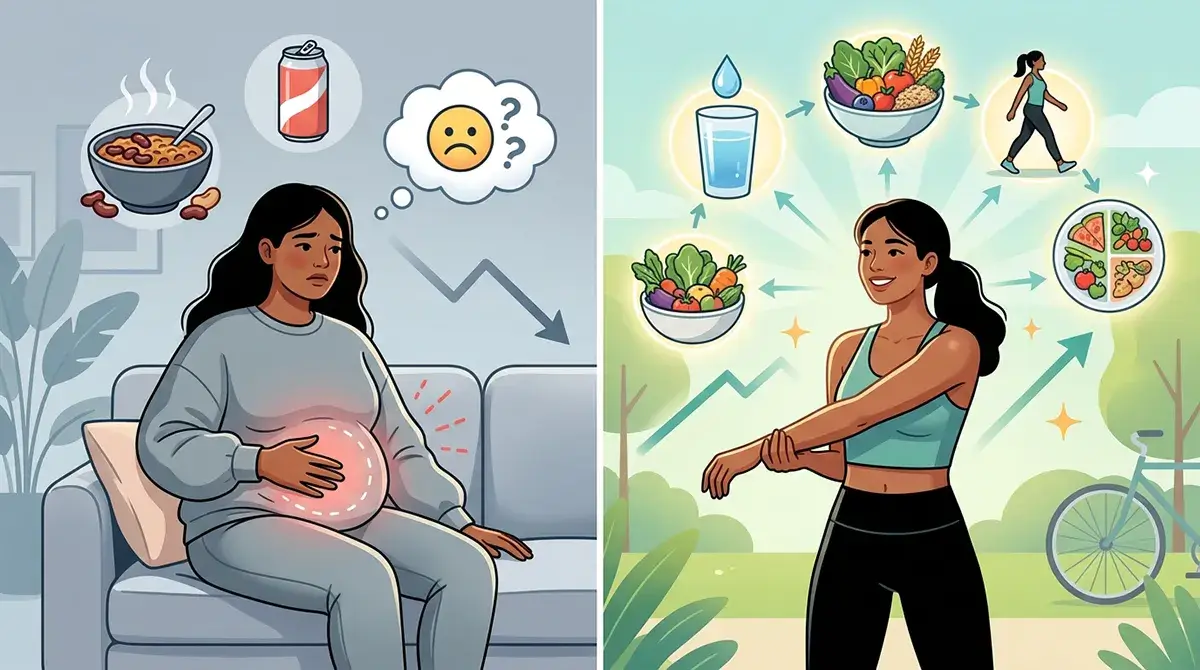
How to Get Rid of Bloating: Evidence-Based Strategies
Now that you understand what causes bloating, here's what actually works to address it.
1
Address the Fermentation Problem
If undigested carbohydrates are your bloating trigger, you have three evidence-based options:
Eat smaller portions of trigger foods: You don't need to eliminate high-fiber foods — they're essential for health. Instead, introduce them gradually and in smaller amounts, giving your gut bacteria time to adapt.
Chew thoroughly: Proper chewing mechanically breaks down food and mixes it with saliva (which contains enzymes). This reduces the amount of work your small intestine has to do, meaning fewer carbohydrates reach your colon undigested.
Consider enzyme supplementation: For specific triggers (lactose, beans, certain vegetables), targeted enzyme supplements can help your small intestine break down those foods before they reach your colon. This is particularly useful if you're not ready to eliminate foods you enjoy.
2
Improve Gastric Motility
How to stop bloating often comes down to getting your stomach to empty at normal speed again.
- Eat slowly and mindfully: Rushing meals triggers swallowing of excess air and doesn't give your vagus nerve adequate time to signal satiety. Aim for 20-30 minutes per meal.
- Move your body after eating: A 10-minute walk after meals stimulates stomach contractions and accelerates gastric emptying by up to 50%. This is one of the simplest interventions available.
- Ginger supplementation: The active compounds in ginger (gingerols and shogaols) enhance gastric muscle contractions. Research shows ginger can accelerate gastric emptying and reduce that heavy, full feeling. Doses of 1-2 grams daily show benefits in studies.
- Peppermint and fennel: These herbs contain compounds that relax intestinal smooth muscle (antispasmodic effects), reducing the cramping sensation and promoting smoother movement of food through your digestive tract.
3
What Relieves Bloating Fast: Acute Relief
For immediate relief when you're already experiencing bloating:
- Abdominal massage: Gentle, clockwise massage of your abdomen can help move gas through your colon more quickly. Start at your lower right side and trace upward, across, and down the left side, following your colon's path.
- Heat: A heating pad or warm compress can relax intestinal muscles and reduce cramping sensations associated with gas accumulation.
- Certain teas: Ginger tea, peppermint tea, and fennel tea all have documented antispasmodic and carminative (gas-relieving) properties. Warm liquids also stimulate gastric motility.
- Probiotics and fermented foods: These reintroduce beneficial bacteria and improve the bacterial composition of your gut, reducing gas-producing species over time. Results typically take 2-4 weeks.
4
Address the Gut-Brain Connection
Stress doesn't just feel like it affects your digestion — it chemically does. Stress hormones like cortisol suppress stomach acid and slow gastric motility, while simultaneously making your gut more sensitive to normal sensations.
How to fix bloating when stress is a factor:
- Regular physical activity: Exercise reduces cortisol and directly improves gut motility. Aerobic exercise is particularly effective.
- Sleep: Adequate sleep restores the gut-brain axis and reduces visceral hypersensitivity. Aim for 7-9 hours.
- Stress-reduction practices: Meditation, deep breathing, and yoga have documented effects on reducing stress-induced bloating.
- Adaptogenic herbs: Ashwagandha, an adaptogen used in traditional medicine, has been shown in research to reduce cortisol and improve gut-brain axis function. Doses of 300-500mg daily are typical in studies.
Optimize Digestive Support
For some people, bloating stems from insufficient digestive capacity — not enough stomach acid, not enough enzymes, or weak intestinal barrier function.
How to relieve bloating in these cases requires more targeted support. We wrote a comprehensive article exploring herbs and nutrients that strengthen the gut barrier, optimize enzyme production, and support the microbiome beyond probiotics alone]. Understanding which type of support your specific situation needs makes a significant difference in outcome.

The Bottom Line: Your Bloating Has a Cause—and Solutions
Bloating feels like a mystery when you don't understand its mechanisms. But once you recognize that it stems from one or more specific causes — fermentation, slow gastric emptying, dysbiosis, stress, or barrier dysfunction — solutions become clear.
Start by identifying which triggers matter most for you. Does your bloating come after specific foods? After stressful events? Later in the day when you've eaten quickly? Once you know the pattern, you can target the root cause rather than just managing the symptom.
For people seeking a more comprehensive approach to gut health — particularly those who've tried probiotics alone without sufficient results — exploring how herbal and nutritional support can address multiple mechanisms simultaneously offers another option.
In our VivoGut review, we made a detailed analysis of a formula specifically designed to address bloating through stress reduction, gut barrier repair, and microbiome support. There you'll find both the science behind individual ingredients and honest assessment of whether that approach fits your situation.
The goal isn't to eliminate all gas from your digestive system — that's impossible and unnecessary. The goal is to restore normal digestion, a balanced microbiome, and a gut that processes food without creating discomfort. That's entirely achievable.