
You've probably noticed the word "nootropics" appearing on supplement shelves, in productivity podcasts, and in the routines of high-performers who claim to have unlocked a sharper, faster version of their brain. The marketing language is seductive: better memory, laser focus, zero brain fog. But what is actually happening inside your brain when you take one of these compounds — and does the science hold up to the claims?
This article breaks down what nootropics are, how they interact with the brain's chemistry and structure, and what the evidence actually says — so you can cut through the noise and make informed decisions about cognitive support.
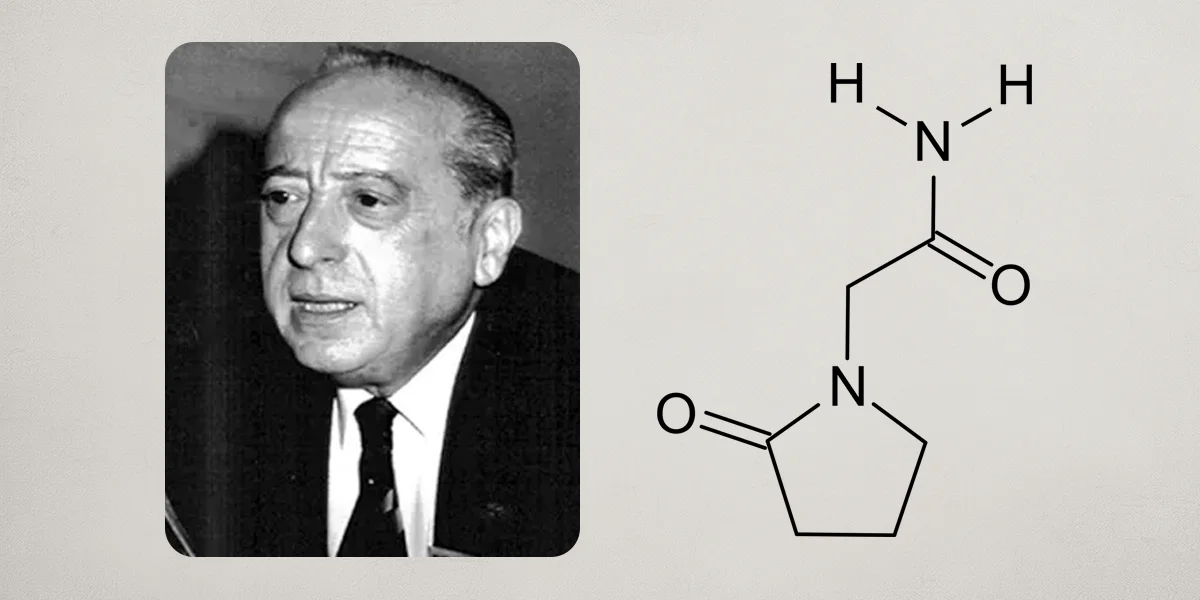
Romanian chemist Corneliu Giurgea
What Does "Nootropic" Actually Mean?
The term was coined in 1972 by Romanian chemist Corneliu Giurgea, who synthesized one of the first cognitive-enhancing compounds, Piracetam. Giurgea defined a true nootropic using five strict criteria: it must enhance learning and memory, protect the brain under adverse conditions, facilitate interhemispheric communication, have low toxicity and side effects, and possess no stimulant or sedative properties.
That last criterion is important — and often ignored by modern marketing. Under Giurgea's original definition, a substance that simply stimulates the central nervous system (like high-dose caffeine) does not qualify as a nootropic. A true nootropic improves brain function without overstimulating it.
In practice today, the term is used more broadly to describe any natural or synthetic compound that supports cognitive performance in some measurable way — memory, attention, processing speed, mental stamina, or mood. This broader use is where most of the confusion (and most of the marketing hype) lives
How the Brain Supports Cognitive Performance
To understand how nootropics work, you need a basic map of what you are trying to support.
Your brain runs on neurotransmitters — chemical messengers that carry signals between neurons. Different neurotransmitters govern different cognitive functions:
Acetylcholine is central to memory formation and learning. It is the neurotransmitter most directly associated with the "encoding" of new information.
Dopamine drives motivation, focus, and the reward system that keeps you engaged with a task.
GABA is your brain's primary inhibitory messenger — it regulates anxiety, calm, and the ability to sustain focused attention without mental noise.
Glutamate is the main excitatory neurotransmitter, essential for synaptic plasticity — the brain's ability to strengthen connections through repeated use.
Beyond neurotransmitters, cognitive performance also depends on cerebral blood flow (how much oxygen and glucose reaches brain tissue), mitochondrial energy production in neurons, and the brain's capacity for neuroplasticity — the ongoing process of building and reorganizing neural connections.
Most nootropics target one or more of these mechanisms. Understanding which mechanism a compound addresses is the key to evaluating whether it does what its label claims.
The Main Categories of Nootropics
Not all nootropics work the same way. Grouping them by mechanism makes it easier to understand what you are actually taking and why.
Cholinergic Compounds
These compounds support the acetylcholine system — the neurotransmitter most directly tied to memory. Alpha-GPC and CDP-Choline are precursors that increase the brain's supply of choline, the raw material for acetylcholine synthesis. Huperzine A, derived from a Chinese club moss, works differently: it inhibits the enzyme that breaks down acetylcholine, effectively extending the time each molecule remains active in the synapse.
Adaptogens
Adaptogens are plant-derived compounds that help the body — and specifically the brain — maintain homeostasis under stress. Rhodiola Rosea and Ashwagandha are the most studied in this category. Their cognitive benefits are largely indirect: by reducing cortisol and blunting the neurological effects of chronic stress, they restore the baseline conditions under which the brain functions optimally. A brain under prolonged stress is a brain with compromised working memory, reduced processing speed, and disrupted sleep — all of which adaptogens help address at the root.
Mitochondrial Support
Neurons are among the most energy-demanding cells in the body. Acetyl-L-Carnitine (ALCAR) supports the transport of fatty acids into mitochondria for energy production, and has shown particular promise in research related to age-associated cognitive decline. Coenzyme Q10 (CoQ10) plays a similar role in the mitochondrial electron transport chain.
Synthetic Racetams
The compound class that started the nootropics field — including Piracetam, Aniracetam, and Oxiracetam — modulates glutamate receptors (specifically AMPA receptors) to support synaptic plasticity and cognitive processing. These are less commonly found in mainstream supplements and are not approved as dietary supplements in the US, but they remain relevant in the nootropics discussion for completeness.

What the Research Actually Says
Here is where the honest conversation gets nuanced — and where most nootropic marketing falls apart.
The evidence base for cognitive enhancement in healthy adults is considerably weaker than the evidence for cognitive support in clinical populations (older adults, those with mild cognitive impairment, or individuals under high stress). Many studies showing significant benefits were conducted on people with measurable deficits, not on healthy individuals seeking a performance edge.
This does not mean nootropics are ineffective. It means the claim "this will make you smarter" is poorly supported, while the claim "this supports brain health under stress, aging, or nutritional deficiency" has a more solid foundation. The distinction matters — especially for a healthy 30-year-old comparing their expectations to a clinical trial conducted on 65-year-olds with early memory decline.
The most robustly studied natural nootropics for healthy adult populations include Rhodiola Rosea (for stress-related cognitive fatigue), Bacopa Monnieri (for memory consolidation, with effects typically appearing after 8-12 weeks of consistent use), and Alpha-GPC (for acetylcholine support).
The Stimulant Question
One of the most common misconceptions in the nootropics space is the conflation of stimulation with enhancement. Caffeine is the world's most widely used psychoactive compound and produces measurable improvements in reaction time, alertness, and sustained attention. But as Giurgea's original criteria noted, stimulation is not the same as cognitive enhancement — it is borrowing energy from future recovery, not building capacity.
Many "nootropic stacks" on the market are primarily caffeine delivery systems with botanical ingredients added at sub-effective doses to justify the label. Reading an ingredient list critically — checking whether each compound is present at a dose that matches the research — is the single most important skill for navigating this category.
What This Means for You
Nootropics are not a shortcut to intelligence. They are a set of tools — some better studied than others — for supporting the biological conditions under which your brain performs at its best. The most credible applications are stress resilience, recovery from cognitive fatigue, and long-term brain health maintenance, particularly as part of a broader lifestyle that includes sleep, exercise, and adequate nutrition.
Understanding the mechanism behind each compound is what separates an informed decision from an expensive experiment.